Sorry for posting this later than planned. But without further ado...
Tales of Mystery and Imagination Edgar Allan Poe (1976/1987)
The Alan Parsons Project

For this blog's formal debut, we'll be looking at the debut album of one of music's most underrated progressive rock groups, The Alan Parsons Project. Actually, underrated may not be the right word for this group, since they were fairly popular when they were around. In the 14 years that the band were around, The Project has released 8 hit singles on the Billboard 100. Nowadays, they're not treated with the same reverrance that's given to prog bands like Pink Floyd and Genesis, but it's impossbile to ignore the fact that they had quite the prescence in the music world back in the day. And it all began with their 1976 debut album, Tales of Mystery and Imagination Edgar Allan Poe.
Practically every trope that listeners would associate with The Project were introduced in this album, such as high production values, a wide array of session musicians, and a colorful variety of guest vocalists. Bringing it all together were the duo that served as the creative nucleus of The Alan Parsons Project: Alan Parsons and Eric Woolfson.
 |
| L-R:Alan Parsons and Eric Woolfson |
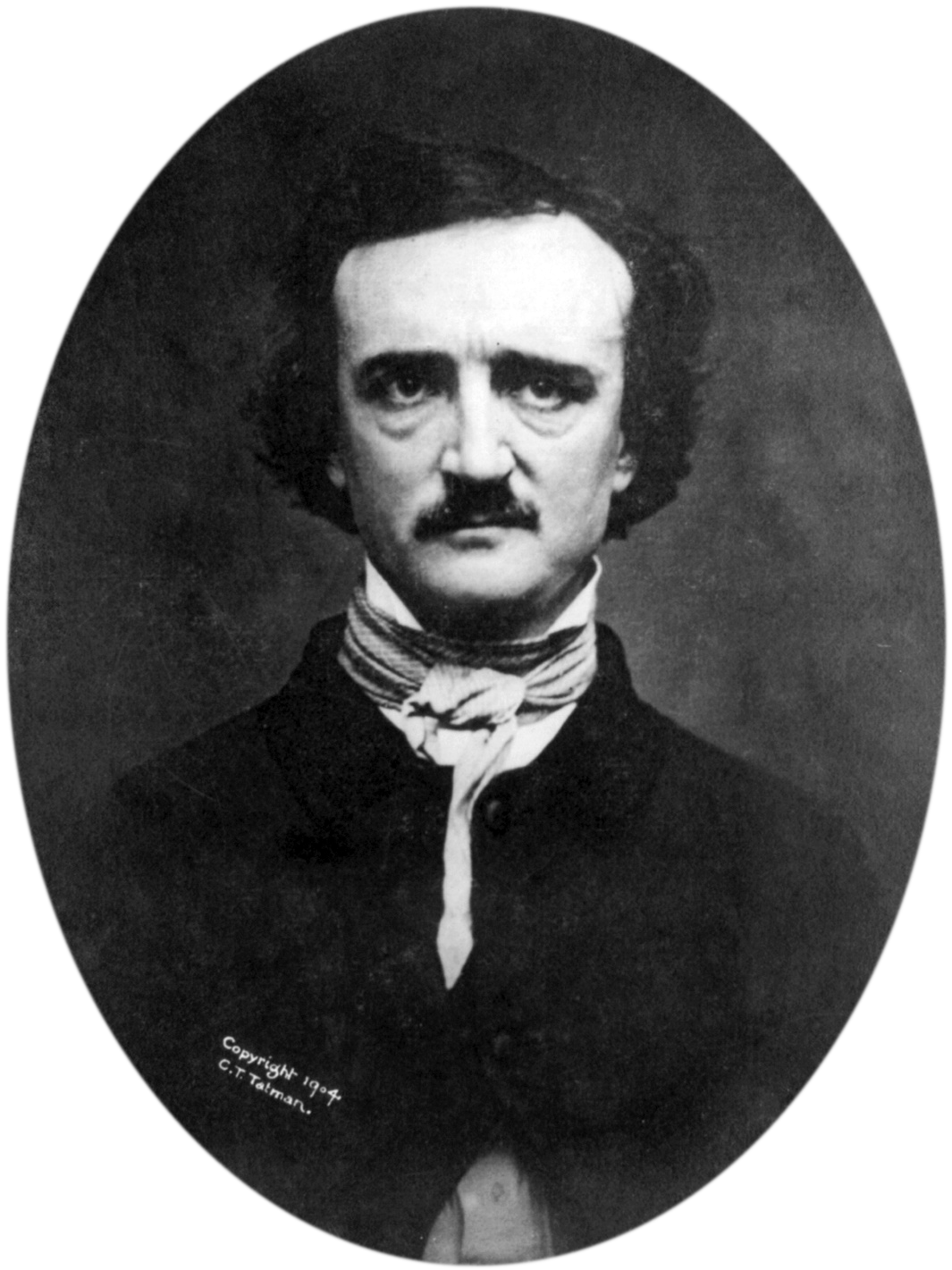 |
| Edgar Allan Poe. The main subject for The Project's debut |
 |
| This album has three different covers. While they're all lousy, this initial 1976 cover is the weirdest of them all. |
While the album goes straight into the song in the original version, the remix opens with narration from Hollywood legend Orson Welles:
"For my own part, I have never had a thought which I could not set down
in words with even more distinctness than that with which I conceived it.
There is, however, a class of fancies of exquisite delicacy which are not
thoughts, and to which as yet I have found it absolutely impossible to
adapt to language. These fancies arise in the soul, alas how rarely.
Only at epochs of most intense tranquillity, when the bodily and mental
health are in perfection. And at those weird points of time, where the
confines of the waking world blend with the world of dreams. And so I
captured this fancy, where all that we see, or seem, is but a dream within
a dream"
in words with even more distinctness than that with which I conceived it.
There is, however, a class of fancies of exquisite delicacy which are not
thoughts, and to which as yet I have found it absolutely impossible to
adapt to language. These fancies arise in the soul, alas how rarely.
Only at epochs of most intense tranquillity, when the bodily and mental
health are in perfection. And at those weird points of time, where the
confines of the waking world blend with the world of dreams. And so I
captured this fancy, where all that we see, or seem, is but a dream within
a dream"
While the song itself already was hypnotic enough, Welles narration enhances the 'mysterious' feel of the album and is a nice touch to an otherwise polarizing remix.
The next track is the haunting "The Raven" This is the first vocal song on the album, featuring Alan Parsons (w/ vocoder) and Leonard Whitling sharing lead vocals. Being that it segues directly from "A Dream..", this track is a nice musical continuation and the lyrics are just as haunting as the Poe poem that it was inspired by. The dual vocals by Parsons and Whitling also adds to the tone of the track. The 1987 remix adds a long guitar solo to the bridge which, while a good solo, really distracts from the suspenseful mood of the song.
Suddenly, the album switches gears into what could possibly be the stand out track of the album: "The Tell-tale Heart" Compared the slow, tense, and spacey musical composition of the first two songs, the music is now more loud and aggressive. To make things more interesting, the lead vocals are handled by flamboyant rock extraordinaire Arthur Brown. While it may seem like a strange choice for a lead vocalist, when one thinks about it enough, Brown's vocals fit perfectly with the lyrical theme of a man slowly going insane after committing a murder.
"The Cask of Amontadillo" once again covers the topic of murder, but the music is now back to the subdued and tense feel of The Raven, except with a larger emphasis on the orchestra instead of the regular four piece band. And just like that song, there's two lead vocalists. John Miles serves as the murderous Montresor, while Terry Sylvester plays his drunk and helpless victim Fortunato. While "Tell-tale Heart" was a great track, this song actually conveys the theme of murder and revenge better.
The next track leaves the themes of macabre and horror behind and dives head first into science fiction with "(The System of) Doctor Tarr and Professor Fether" In an attempt to (sort of) lighten things up, a more radio friendly song was added to the album. The gamble worked and the single surprisingly made the Billboard Top 40 in 1976, effectively giving the Project their first of many more hit songs. Both the music and lyrics have a very carefree and slightly comedic edge, making it more accessible for the average listener despite having lyrical content that's quite strange considering Poe's type of writing. Returning from the previous track is John Miles, adding to the semi-humorous feel of the song.
 |
| Probably the best side of this album. But the album as a whole is definitely worth listening to! |
"Shadows of shadows passing. It is now 1831, and as always I am
absorbed with a delicate thought. It is how poetry has indefinite
sensations, to which end music is inessential. Since the comprehension
of sweet sound is our most indefinite conception, music, when combined
with a pleasurable idea, is poetry. Music without the idea is simply music.
Without music or an intriguing idea, colour becomes pallor, man becomes
carcase, home becomes catacomb, and the dead are but for a moment
motionless."
absorbed with a delicate thought. It is how poetry has indefinite
sensations, to which end music is inessential. Since the comprehension
of sweet sound is our most indefinite conception, music, when combined
with a pleasurable idea, is poetry. Music without the idea is simply music.
Without music or an intriguing idea, colour becomes pallor, man becomes
carcase, home becomes catacomb, and the dead are but for a moment
motionless."
This whole piece is entirely instrumental, making it the longest that The Project would ever record. While it's listed as one track on the liner notes, it's broken up into five different and distinct sections: Prelude, Arrival, Intermezzo, Pavane, and Fall. Parts One and Five are primarily orchestrated, while the rest features an array of keyboards. While the piece is very ambitious, it actually manages to be the weak link of the album. It tends to drag on at times, especially part four, and just when the song seems to be going somewhere, it suddenly reaches the last part. The Project would attempt this mini opera style of song writing four years later in their 1980 album, "The Turn of a Friendly Card" But that's a discussion for another day...
After a brief reprise of "Fall", a very poppy guitar fades in and so begins the closing track "To One in Paradise" And if you thought that "Doctor Tarr and Professor Fether" was a dramatic change of tone, here's something even stranger: a song based on a Poe poem about love. While the music here is very upbeat and joyful, the lyrics about an unnamed narrator lamenting about a lost love brings the traditional Poe melancholy into the mix. Terry Sylvester comes back to provide lead vocals and his performance adds to the bittersweet feel of the song. Despite the change in tone, this track is a seriously underrated contender for a list of "Best Album Closers" It's also a great song for Valentine's Day, though for the wrong reasons. Both the song and the album ends with Sylvester reading the last stanza of the original poem:
"And all my days are trances,
And all my nightly dreams
Are where thy dark eye glances,
And where thy footstep gleams--
In what ethereal dances,
By what eternal streams"
Best songs: All of side one and To One in Paradise
Conclusion: This album is one of the greatest debut albums of all time. Right up alongside The Piper At The Gates of Dawn, Led Zeppelin I, and even Appetite for Destruction. While, in true 1970s fashion, critics have dismissed both the album and group as an act that's destined to not last more than two albums top, The Alan Parsons Project would soon prove them wrong with nine more albums over the course of 14 years. Though several of their later albums would eclipse Tales in terms of quality, the original album is still an ingenious prog classic.
You can hear both versions of the album below.
1976 orignal
1987 remix
Until next time, stay gold folks!

No comments:
Post a Comment