Sunday, March 22, 2015

Top 5 Live Albums

I don't know about you, but I judge a band's true worth by their live discography. Studio material is one thing, but it's another to make that same material sound amazing on a live stage, maybe even better than the studio. Some bands are clearly studio products that crash and burn every time they try to hit the road. Others are so firmly rooted on the stage, that the only way to feel the true power of their music is to go to any of their live shows. And this is a salute to the latter type of band. With so many great live albums out there, picking only five was a massive task. But I think I've managed to pull it off, so without further ado...

Baruch n Roll's Top 5 Live Albums

1. Live at Leeds (The Who-1970)
Judging by the title of this list, I imagine that you already predicted what the top pick is going to be. Might as well get the obvious winner out of the way first. But let's be real for a moment here. Is there anything about this live album that hasn't already been said? This epitomizes what a live album should be. Full of blistering instrumentation, clever improvisation, and even some bit of clever bantering between members on the stage in between songs (seriously, that long exchange between guitarist Pete Townshend and drummer Keith Moon while introducing "A Quick One, While He's Away" always makes me laugh) The one track on the album to really show off the power of The Who on the stage is their blistering 15 minute rendition of their signature song, "My Generation" While the main track itself only takes up a measly 2 and half minutes, the rest of it features various snippets of Who songs and short band jams to keep the momentum going. If that wasn't enough to make the album stick out from the pack, the band also performs their ground breaking rock opera Tommy in its entirety. Though some songs were left on the cutting room floor when translating to opera to the live stage, the performances lets the band show it off in a raw and untamed way that forsakes all the acoustic guitars, keyboards, and brass sections that were featured in the original studio album. Hell, I might even say that live Tommy kills studio Tommy in every way, shape, and form. And if you need more live Who goodness, the tour that this show was originally part of also resulted in two more equally great albums: 1996's Live at the Isle of Wight 1970 and 2012's Live at Hull. 

5. Live: Right Here, Right Now (Van Halen-1993)
Here's a controversial addition. Van Halen's then lead singer Sammy Hagar claimed in his autobiography that almost the entire album was made from studio overdubs rather than culled from the actual soundboard recordings from the band's two night run in Fresno, California. The Van Halen brothers, Eddie & Alex, claim otherwise. Regardless of which camp you side on, this is a neat release that gives a tantalizing peak into a band that was at the zenith of its popularity in North America. Obviously, more than half of the album is made up of material from their first three albums with Hagar, including a near complete performance of their then latest album, For Unlawful Carnal Knowledge. Though they don't really go too far from the studio versions, Sammy's vocalsBut to add some diversity to the setlist, four tracks from Van Halen's original singer David Lee Roth are thrown in, including the obligatory performance of the band's smash hit single "Jump" And what's a Van Halen concert without the three instrumental solos that make up the main experience. Namely Michael Anthony's trippy bass effects solo, Alex Van Halen's Moby Dick-inspired drum solo, and Eddie Van Halen's 'erupting' guitar solo. Say what you will about the Sammy Hagar era, but this album really does show how much of a more controlled and disciplined live act they became with him behind the mic. And with the preview singles of the band's first ever live album with David Lee Roth coming to light, it's clear that the band is in desperate need for both Hagar and Anthony's vocals.


4. Live Scenes From New York (Dream Theater-2001)
Dream Theater has released so many live albums in their 25+ year existence. All of them are of very high quality, so trying to pick one to include was unbearably hard. But this one takes the cake on the grounds of it being the only official Dream Theater live album to have the band play an entire studio album front to back. As the title implies, this was recorded during the final night on the promotional tour for Metropolis Part II: Scenes from A Memory. Aside from performing the album in its entirety, the band enhanced the rock opera feel by adding actors to play several characters from the storyline, also serving as a way to close any loose ends that were present in the original album. While Metropolis Pt. 2 was a great album on its own, this live rendition greatly improves it and surely puts it alongside other classic rock operas like The Who's Quadrophenia, Pink Floyd's The Wall, and Genesis' The Lamb Lies Down On Broadway. In addition to performing the opera, Dream Theater also performs several songs from their first three albums with singer James LaBrie, as well a complete performance of the title suite from their 1995 EP, A Change of Seasons. While a noticeable lack of "Pull Me Under" is a glaring omission, the performances are still just as solid and intense as one would expect from the band. They even manage to work in some humor in the musicianship of the songs (seriously, find me a live metal album that has their guitarist playing the theme song to The Simpsons in the middle of a lengthy solo!) Again, Dream Theater has so many excellent live albums under their belt. But this is the one that managed to outperform all of them and should definitely be checked out by both rock fans and music fans in general.

3. Welcome Back My Friends to the Show that Never Ends...Ladies and Gentlemen... (Emerson, Lake & Palmer-1974)
Like Dream Theater, ELP is an amazing live act (a common thing with progressive rock acts). While they released 3 live albums in their initial run (and many more after their disbanding), their second album showed the band in their untamed proggy glory. Recorded on multiple dates during the trio's 1973-1974 Brain Salad Surgery World Tour, it features the band playing the album more or less in its entirety, sans that album's pointless filler song "Benny the Bouncer" Also included are the various classic ELP songs from their three prior albums. One strange omission from these shows was their cover of Modest Mussorgsky's "Pictures at an Exhibition", considering that was their highlight track in any of their concerts, before and after. Three tracks from the album stretch past the 30 minute mark, adding to the progressive power trio's live power. "Tarkus" is transformed from an already epic studio track into a gargantuan composition that even takes time to pay homage to Greg Lake's previous tenure as lead singer and bass guitarist of King Crimson. "Take a Pebble" was already a lengthy display of the band's lighter side. But this live version not only lets Keith Emerson to display his unmatched skills at keyboards, but also for Lake to perform two of his popular acoustic ballads in the lengthy middle section, "Still...You Turn Me On" and "Lucky Man". The epic closer, "Karn Evil 9", features all three of the members firing from all cylinders. Most particularly Carl Palmer, who belts out an intense drum solo that shows clear influences from legendary jazz drummers like Buddy Rich and Gene Krupa. Need a proper introduction to the original progressive power trio? This live album is great way to start!

Before we get to number 2, here's a few of the runner ups:

5. Once in a LIVEtime (Dream Theater-1998)

4. Wings Over America (Paul McCartney & Wings-1976)

3. Live Era '87-'93 (Guns N' Roses-1999)

2. Is There Anybody Out There: The Wall Live 1980-1981 (Pink Floyd-2000)

1. The Song Remains The Same (Led Zeppelin-1976)


And the second best live album of all time is...
2. How the West Was Won (Led Zeppelin-2003)
One would expect that a band as legendary as Led Zeppelin have multiple official live releases after the breakup in 1980. Not counting 1997's BBC Sessions and the companion disc to 2014's deluxe remaster of Led Zeppelin I, there's really only been 3 traditional live albums released from the band's vaults. It might be frustrating for the fans, but this triple album shows Led Zeppelin at their absolute best on the stage. Aside from featuring some of the bands biggest hits from their first four albums, three songs from the band's then forthcoming Houses of the Holy album are also performed. Just like the ELP live album, three cuts from this live album extend past the 20 minute mark. "Dazed and Confused" is transformed from a 6 minute studio track, into a vehicle for guitarist Jimmy Page to show off his incredible guitar playing skills. "Moby Dick" is the quintessential drum solo that has the late John Bonhm beat his kit into the ground, only to keep on going strong even after the solo. "Whole Lotta Love" features the band coming together to close the show by throwing in several tributes to various blues and rockabilly artists that have played major parts in inspiring the band's heavy sound. While bassist/keyboardist John Paul Jones doesn't have a chance to display his skills with a lengthy track of his own, his presence on bass and keyboards on tracks like "Dazed and Confused" and "Stairway to Heaven" nevertheless helps to augment the Led Zeppelin sound alongside the other two musicians. Though a new official Led Zeppelin live album would be incredibly awesome (especially an official release of these shows), this album, for now anyways, is the definitive Led Zeppelin live experience. 

And that's my top 5 favorite live albums. What are your favorite albums? Sound off in the comments below!

Stay gold!

-Luis L.

Sunday, March 1, 2015

Tales of Mystery and Imagination

Sorry for posting this later than planned. But without further ado...

Tales of Mystery and Imagination Edgar Allan Poe (1976/1987)
                                The Alan Parsons Project


For this blog's formal debut, we'll be looking at the debut album of one of music's most underrated progressive rock groups, The Alan Parsons Project. Actually, underrated may not be the right word for this group, since they were fairly popular when they were around. In the 14 years that the band were around, The Project has released 8 hit singles on the Billboard 100. Nowadays, they're not treated with the same reverrance that's given to prog bands like Pink Floyd and Genesis, but it's impossbile to ignore the fact that they had quite the prescence in the music world back in the day. And it all began with their 1976 debut album, Tales of Mystery and Imagination Edgar Allan Poe.


Practically every trope that listeners would associate with The Project were introduced in this album, such as high production values, a wide array of session musicians, and a colorful variety of guest vocalists. Bringing it all together were the duo that served as the creative nucleus of The Alan Parsons Project: Alan Parsons and Eric Woolfson.
L-R:Alan Parsons and Eric Woolfson
As with every subsequent APP album, Tales is a concept album, a type of album that features various songs that are linked together by one overall theme. As this title implies, the focus is the works of legendary macabre writer, Edgar Allan Poe. The names of all of the tracks shares a name of some of Poe's well known stories, as well as some of his more obscure works. The first side features a few catchy Pink Floyd-ish tracks while the second side features the epic concept piece "The Fall of the House of Usher" before concluding with a sweet pop single, "To One in Paradise"
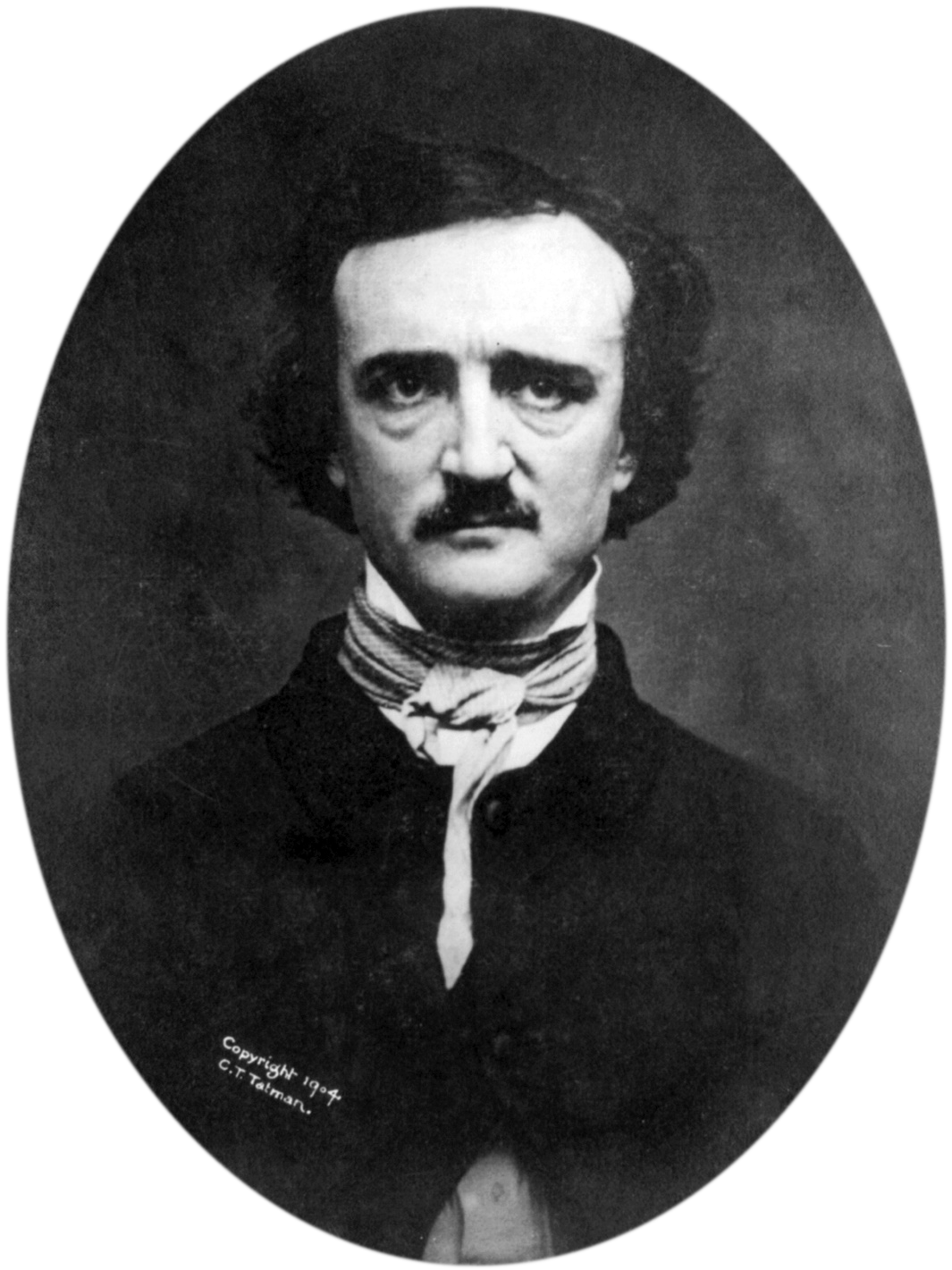
Edgar Allan Poe. The main subject for The Project's debut
You may have noticed that there's two release years listed for this album. That's because Tales was completely remixed and altered in 1987. While there are some minor changes added, like drum echoes, there's also a lot of major changes, such as several new vocal and instrumental overdubs being added. While the remix is still good in it's own right, the original mix is still the better version of album worth listening. But if you want to make your own choice, you can easily buy the Deluxe Edition (shown on the top) of this album on iTunes, since it comes with both mixes on two discs.

This album has three different covers. While they're all lousy, this initial 1976 cover is the weirdest of them all.
The album opens with "A Dream Within A Dream", a wonderful instrumental that sets the stage for one of the strongest debut albums ever recorded. This is also one of many instrumentals that Parsons recorded to really show his influence from engineering and producing Pink Floyd's Dark Side of the Moon, as the track brings back some memories of that album's "Any Colour You Like" instrumental. The song itself will hook any unsuspecting listener into listening to the rest of album, since it's spacey synth aura

While the album goes straight into the song in the original version, the remix opens with narration from Hollywood legend Orson Welles:

"For my own part, I have never had a thought which I could not set down
in words with even more distinctness than that with which I conceived it.
There is, however, a class of fancies of exquisite delicacy which are not
thoughts, and to which as yet I have found it absolutely impossible to
adapt to language. These fancies arise in the soul, alas how rarely.
Only at epochs of most intense tranquillity, when the bodily and mental
health are in perfection. And at those weird points of time, where the
confines of the waking world blend with the world of dreams. And so I
captured this fancy, where all that we see, or seem, is but a dream within
a dream"

While the song itself already was hypnotic enough, Welles narration enhances the 'mysterious' feel of the album and is a nice touch to an otherwise polarizing remix.

The next track is the haunting "The Raven" This is the first vocal song on the album, featuring Alan Parsons (w/ vocoder) and Leonard Whitling sharing lead vocals. Being that it segues directly from "A Dream..", this track is a nice musical continuation and the lyrics are just as haunting as the Poe poem that it was inspired by. The dual vocals by Parsons and Whitling also adds to the tone of the track. The 1987 remix adds a long guitar solo to the bridge which, while a good solo, really distracts from the suspenseful mood of the song.

Suddenly, the album switches gears into what could possibly be the stand out track of the album: "The Tell-tale Heart" Compared the slow, tense, and spacey musical composition of the first two songs, the music is now more loud and aggressive. To make things more interesting, the lead vocals are handled by flamboyant rock extraordinaire Arthur Brown. While it may seem like a strange choice for a lead vocalist, when one thinks about it enough, Brown's vocals fit perfectly with the lyrical theme of a man slowly going insane after committing a murder.

"The Cask of Amontadillo" once again covers the topic of murder, but the music is now back to the subdued and tense feel of The Raven, except with a larger emphasis on the orchestra instead of the regular four piece band. And just like that song, there's two lead vocalists. John Miles serves as the murderous Montresor, while Terry Sylvester plays his drunk and helpless victim Fortunato. While "Tell-tale Heart" was a great track, this song actually conveys the theme of murder and revenge better.

The next track leaves the themes of macabre and horror behind and dives head first into science fiction with "(The System of) Doctor Tarr and Professor Fether" In an attempt to (sort of) lighten things up, a more radio friendly song was added to the album. The gamble worked and the single surprisingly made the Billboard Top 40 in 1976, effectively giving the Project their first of many more hit songs. Both the music and lyrics have a very carefree and slightly comedic edge, making it more accessible for the average listener despite having lyrical content that's quite strange considering Poe's type of writing. Returning from the previous track is John Miles, adding to the semi-humorous feel of the song.
Probably the best side of this album. But the album as a whole is definitely worth listening to!
As mentioned before, most of the second side is taken up by "The Fall of the House of Usher" Depending on the version, side two either goes straight into the song or opens with more Orson Welles narration:

"Shadows of shadows passing. It is now 1831, and as always I am
absorbed with a delicate thought. It is how poetry has indefinite
sensations, to which end music is inessential. Since the comprehension
of sweet sound is our most indefinite conception, music, when combined
with a pleasurable idea, is poetry. Music without the idea is simply music.
Without music or an intriguing idea, colour becomes pallor, man becomes
carcase, home becomes catacomb, and the dead are but for a moment
motionless."

This whole piece is entirely instrumental, making it the longest that The Project would ever record. While it's listed as one track on the liner notes, it's broken up into five different and distinct sections: Prelude, Arrival, Intermezzo, Pavane, and Fall. Parts One and Five are primarily orchestrated, while the rest features an array of keyboards. While the piece is very ambitious, it actually manages to be the weak link of the album. It tends to drag on at times, especially part four, and just when the song seems to be going somewhere, it suddenly reaches the last part. The Project would attempt this mini opera style of song writing four years later in their 1980 album, "The Turn of a Friendly Card" But that's a discussion for another day...

After a brief reprise of "Fall", a very poppy guitar fades in and so begins the closing track "To One in Paradise" And if you thought that "Doctor Tarr and Professor Fether" was a dramatic change of tone, here's something even stranger: a song based on a Poe poem about love. While the music here is very upbeat and joyful, the lyrics about an unnamed narrator lamenting about a lost love brings the traditional Poe melancholy into the mix. Terry Sylvester comes back to provide lead vocals and his performance adds to the bittersweet feel of the song. Despite the change in tone, this track is a seriously underrated contender for a list of "Best Album Closers" It's also a great song for Valentine's Day, though for the wrong reasons. Both the song and the album ends with Sylvester reading the last stanza of the original poem:

"And all my days are trances, 
And all my nightly dreams
Are where thy dark eye glances,
And where thy footstep gleams--
In what ethereal dances,
By what eternal streams"

Best songs: All of side one and To One in Paradise

Conclusion: This album is one of the greatest debut albums of all time. Right up alongside The Piper At The Gates of Dawn, Led Zeppelin I, and even Appetite for Destruction. While, in true 1970s fashion, critics have dismissed both the album and group as an act that's destined to not last more than two albums top, The Alan Parsons Project would soon prove them wrong with nine more albums over the course of 14 years. Though several of their later albums would eclipse Tales in terms of quality, the original album is still an ingenious prog classic.

You can hear both versions of the album below.
1976 orignal

1987 remix

Until next time, stay gold folks!

Thursday, February 5, 2015

Welcome!

Hey everybody!

Welcome to the companion blog to the WBMB radio show, Baruch n Roll!

I'm not entirely sure if any other WBMB host has ever started a companion blog for his/her show, but I really am the first, I guess I can consider my self a pioneer!

But I digress. This here blog will not only serve as a means of getting information involving Baruch n Roll out there, but also as a place where I can share music news, Top 10 lists, and in depth looks at music albums with all those willing to read such things.

Anyways, welcome again and I hope you enjoy the blog!

Next post will feature a look at Tales of Mystery and Imagination by The Alan Parsons Project.

Stay Gold!
-Luis L.